By web evolution I’m not talking Internet 4.0, I’m talking Darwinian survival. In the Darwinian model, evolution requires three things:… Read More





By web evolution I’m not talking Internet 4.0, I’m talking Darwinian survival. In the Darwinian model, evolution requires three things:… Read More

Video: The Next Generation of Standards (a recorded E4C Webinar) Standards remain especially important for products that address the world’s… Read More
Where did the privacy slippery slope begin? Or perhaps asking the question with more focus, when did we start trading… Read More

November 2, 2017 Sydney, Australia

We may be passing a tipping point in the area of individualized marketing/advertising. This has surfaced as the U.S. Federal… Read More

A Guest Blog Post from: Victoria A. Hailey, CMC & Katherine Bennett, (standards development leaders in IEEE). On 28 September 2017,… Read More

Recent research indicates that pollution (air, water, …) is a major killer on a global basis. That pollution kills is… Read More

The conversation about “Web Science” is becoming more urgent and more central to the future of the planet and the way we live a life worth living.

Periodically, often after a unconscionable massacre such as Las Vegas or Orlando, the United States reviews the balance between the… Read More

In today’s world of climate denial and vaccine skepticism, one would be forgiven for assuming that an anti-intellectual, anti-expertise, anti-truth wave is sweeping the globe, and that the rise of the far right necessarily spells an end for science-informed policy.

NPR’s Richard Harris joins Andrew Maynard and Heather Ross to talk about his new book Rigor Mortis: How Sloppy Science Creates Worthless Cures, Crushes Hope, and Wastes Billions.
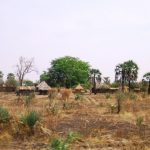
Consider the fairly typical residence in this picture from Mfuwe, Zambia. This site has external sanitation facilities, a wood cook… Read More

At Brave Conversations we tried to do something different — not to have a conventional conference where everyone hid behind their professional personae, delivered papers and were generally spoken at.
Licensing of Engineering Professionals: Is there any validity to this practice? The Education Department of the State of New York says — there is. IEEE Policy also says there is. The reality, I have come to continuously over four decades in practice as an electrical power engineer in the service of more than a dozen U.S. firms — is that there is none!

We need our brains to adapt advantageously for ingenious design and development, especially as the time between stimulus and response becomes precariously pressurized.

Using biometric technology to identify and monitor people raises human rights concerns. In particular, biometrics are often associated with intrusions into privacy.

Which came first: technology or society? Did the formation of social collaboration among early humanoids precede the first “technological” advances (fire, stone tools, etc.), or did these technologies form the catalyst for building more complex social structures?

The next generation of socio-technical system can be seen as a kind of “focal point” for the convergence of a number of current trends in computing, information systems, and information technology. These trends include the technology-driven instrumentation of infrastructure by ubiquitous computing and/or “intelligent” devices, with the prefix “smart” now taking precedence over the prefix “e-,” i.e. SmartGrids, SmartCities, SmartMotorways, etc., rather than the e-commerce. e-health, e-learning initiatives commonplace at the turn of millennium.

Pillar 2 is focused on professional and research ethics, ethics in the development of technologies, ethics in the context of Sustainable Development and Humanitarian Technology, as well as engineering ethics education.

Mining has had an impact on many Aboriginal communities in Australia. As we move to a mining sector where dump trucks, underground excavators, loaders, and conveyor systems are transformed into partial or fully autonomous systems, there is little or no human labor required other than to maintain equipment or provide oversight using a range of distant surveillance technologies.

 JOIN SSIT