Tuesday 5.30 – 7.00 p.m. (EDT), 2.30 pm – 4.00 pm (MST), Wednesday 7.30 am – 9.00 am (AEST); ;– “IP Location Services and Automated Biometric Recognition”




Tuesday 5.30 – 7.00 p.m. (EDT), 2.30 pm – 4.00 pm (MST), Wednesday 7.30 am – 9.00 am (AEST); ;– “IP Location Services and Automated Biometric Recognition”

Tuesday, August 10 7:30 pm – 10:45 pm USA Eastern Time (Wednesday Aug 11 9:30 a.m.-12:45 pm Australian Eastern Time)
Webinar: Emerging Location-based Services and Technologies, GeoSurveillance and Social Justice Issues

Digital discrimination is becoming a serious problem, as more and more decisions are delegated to systems increasingly based on artificial intelligence techniques such as machine learning. Although a significant amount of research has been undertaken from different disciplinary angles to understand this challenge—from computer science to law to sociology— none of these fields have been able to resolve the problem on their own terms. We propose a synergistic approach that allows us to explore bias and discrimination in AI by supplementing technical literature with social, legal, and ethical perspectives.

When we see a built world, we tend to take its permanence and stability for granted. For those who have chosen coastal homes, that built world goes back at least 50 years, with few residents ever realizing that oceans, lakes, and rivers are living entities constantly in motion. The average person relies upon experts such as architects and civil engineers, and supposed guardrails such as state building codes and homeowner associations, to assess safety when purchasing property. But the 21st-century assumption that the built world is stable is a risky bet. Especially in “business-friendly” states.

The IEEE SSIT Norbert Wiener Award for Social and Professional Responsibility recognises an exceptional contribution or outstanding career by an individual… Read More
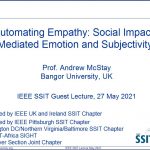
This SSIT Guest Lecture was presented by Prof. Andrew McStay, Bangor University, UK at a Joint Chapter Meeting organised by… Read More

Disease prevention due to successful vaccination is a double-edged sword as it can give the illusion that mass vaccination is no longer warranted. Antivaccination movements are not completely absent throughout history, but for example, most recently, parents have been declining childhood vaccines at alarming levels [2, S9]. Safety concerns and misinformation seem to be at the forefront of these movements.
Join the Student Discussion Forum in association with ASU PIT on IP Location Services and Automated Biometric Recognition!

This SSIT Guest Lecture was presented by Miriam Cunningham, IST-Africa Institute, Ireland at a Joint Chapter Meeting organised by IEEE… Read More

Few people would celebrate modern infrastructure networks as magnificent beacons of our civilization: our powerlines and pipelines are drab, unsightly intrusions on the landscape. Reflecting on this, the philosopher Alain de Botton points out the Roman aqueduct at Pont Du Gard in Southern France, which is now a famous tourist attraction even though it was built for the dull task of supplying municipal water. Wisely, the Romans built it, and many others, for both beauty and function, brightening citizens’ views while slaking their thirst. Indeed, so lovely is the Roman aqueduct of Segovia that it is featured in the emblem of that province.

This SSIT Guest Lecture on “The Great Reset: Pandemic, Society and IEEE SSIT” was presented by Mr. Satish Babu, President… Read More

Access Volume 2, Issue 2, 2021 – Special Issue on Socio-Technical Design for Public Interest Technology Current Issue (2, 2) Front… Read More
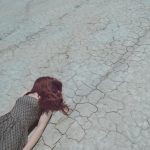
Arizona continues to build, build, build, and instead of requiring new residents to adapt to the climate, city governments and developers market the very bad idea that the desert can be made green, and thus more desirable.

Unintended consequences of technological development matter in practice and thus are not just of academic interest. SSIT would do well to spark constructive and practical discussion about managing unintended consequences.

This SSIT Guest Lecture was presented by Ning Wang, IBME, University of Zurich, Switzerland at a Joint Chapter Meeting organised… Read More

IEEE GHTC 2021 invites submission of full papers and short papers by secondary deadline of 02 July. We would like… Read More
The 21st Century Norbert Wiener Conference with the theme: “Being Human in a Global Village” is the third in a series of conferences initiated by the IEEE Society on Social Implications of Technology (SSIT), following events in Boston (2014) and Melbourne (2016).

Just as the “autonomous” in lethal autonomous weapons allows the military to dissemble over responsibility for their effects, there are civilian companies leveraging “AI” to exert control without responsibility.
And so we arrive at “trustworthy AI” because, of course, we are building systems that people should trust and if they don’t it’s their fault, so how can we make them do that, right? Or, we’ve built this amazing “AI” system that can drive your car for you but don’t blame us when it crashes because you should have been paying attention. Or, we built it, sure, but then it learned stuff and it’s not under our control anymore—the world is a complex place.
ISTAS 2021 will be jointly hosted by the University of Waterloo and the University of Guelph (Ontario, Canada) in October 28-31, 2021. Submission Deadline July 13, 2021

The COVID-19 pandemic has exposed and exacerbated existing global inequalities. Whether at the local, national, or international scale, the gap between the privileged and the vulnerable is growing wider, resulting in a broad increase in inequality across all dimensions of society. The disease has strained health systems, social support programs, and the economy as a whole, drawing an ever-widening distinction between those with access to treatment, services, and job opportunities and those without.
 JOIN SSIT