
Digital enterprises have become increasingly monopolistic, individualistic beyond narcissistic to the point of lamentably solipsistic, devastatingly careless of human potential, and environmentally wasteful.


Digital enterprises have become increasingly monopolistic, individualistic beyond narcissistic to the point of lamentably solipsistic, devastatingly careless of human potential, and environmentally wasteful.

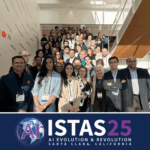
The 2025 IEEE International Symposium on Technology and Society (ISTAS25) themed “AI Evolution and Revolution” was held September 10-12 at Santa Clara University, Santa Clara, CA, U.S.A..

SSIT’s August 2025 Podcast is now LIVE on IEEE TV

We examine social media’s profound influence, delving into its effects on self-esteem, media consumption habits, and exposure to targeted marketing.

The choices for development, roads, trains, and transport are just as essential to the social impacts of technology as the technologies themselves.

CUCCR approaches solid waste by harnessing data collection to understand the waste flows within the university, using a tucked-away basement space to give waste materials a chance to pause and potentially be repurposed before being landfilled or recycled.

Given the urgency of the climate crisis, wealth and income inequality and affordability, and ongoing global conflicts and genocide, along with the erosion of centuries of democratic norms, it is imperative that academics stand up for their research and its practical applications.

Cities’ abilities to lead on climate action and in democracy speak to the power of collective action and to the potential our individual action has when we can make common cause at the local scale.

We initiated this special issue to highlight innovative and essential work underway on technology and analytics for global development. The panoply of important Adaptation and sustainability are essential, enabled by technologies that optimize crop production, improve quality, and protect the environment. topics discussed at ISTAS23 presented a difficult, but welcome challenge of deciding the theme for this special issue.

Though it is hard to find accurate figures on how many products introduced every year fail to meet safety and environmental standards—partly because market surveillance proves to be inadequate [6], while the assessment of market readiness is, in many cases, left to producers themselves [7] —the number may be higher than the public expects.

The Earth 3 podcast will explore Earth 1 through the lens of Science, Technology, the Environment, Ethics, and Law, or STEEL for short.

Regenerative agriculture involves improving, not depleting, the resources used. Cora and Mike’s methods emphasize the symbiotic relationship between the animals and the land, ensuring that both thrive in a balanced and healthy environment.

Food security and agriculture are complex systems that interconnect with many other issues, including poverty and environmental sustainability. These urgent issues inspire proposals for technological solutions. Emerging technologies are often proposed as ways to increase food supply to end hunger. Other proposals target agricultural practice, grounded in the knowledge that agriculture has a large carbon footprint, and the fear that the negative climate impacts of agriculture would worsen as the population increases.

ISTAS25 will be held at Santa Clara University in Santa Clara, CA, September 10-12, 2025, and themed AI Evolution and Revolution.

ISTAS 2024 continued on Thursday September 19 in Puebla, Mexico, with a second day of outstanding programming addressing the social implications of artificial intelligence, as well as sustainability and climate change, ethics and human values, and technology policy and law.

Text Neck is a classic ergonomic issue that has come about as a direct result of technological innovation, as people have begun to increasingly use digital media of all types to text, talk, browse the internet, listen to music, watch videos, or play online games.

Spain’s Comunitat Valenciana (Valencian Community) (Figure 1) has a rich agricultural history, with long traditions of resilience and innovation. This tradition,… Read More

The articles in this special issue focus on the connected nature of the SDGs and the need to address them using community-based approaches and span essential steps for widespread SDG attainment, including planning, implementation, and monitoring.

The LLES Project promotes the transformation of the conventional construction paradigm, incorporating bioclimatic architecture strategies like passive measures to minimize heat gain and maximize cooling.

At the Recent international negotiations on climate change in Dubai in 2023, the potential for artificial intelligence (AI) to play a critical role in addressing climate challenges was recognized through the initiative “AI for Climate Action (#AI4ClimateAction).”