Security threats to smart devices are not just from hacking, but also from a lack of control over data access. The separation of security from convenience makes it difficult for the average user to determine how secure a smart device is.




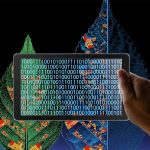
Security threats to smart devices are not just from hacking, but also from a lack of control over data access. The separation of security from convenience makes it difficult for the average user to determine how secure a smart device is.
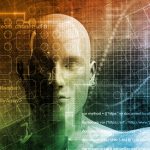
It is important to discuss both the potential and risks of machine learning (ML) and to inspire practitioners to use ML for beneficial objectives.

Julie Wosk’s My Fair Ladies is an engaging historical account of female automata, with sidelights on dolls, disembodied electronic female voices, masks, make-up, and the sexual and gender implications of efforts to create artificial humans.

Playing a gender role in a society is engagement in a complex system and the list of necessary conditions for success in STEM is arguably longer for girls than for boys.

Mega-platforms have, with the addition of one extra ingredient, combined lock-in and loyalty to create a grave, and perhaps unexpected, consequence. The extra ingredient is psychology; and the unexpected consequence is what might be called digital dependence.

The primary driver for agetech investment appears to be growing fears around caring for aging populations. But initiatives tend to skate over some of the inherent challenges.

Democracy itself is under (yet another) threat from deepfake videos … deepfake videos could be used to create compromising material of politicians: for example, the digitally-altered video2 of U.S. House of Representatives speaker Nancy Pelosi appearing to slur drunkenly was viewed millions of times and tweeted by the U.S. President, and although the video is demonstrably a hoax, the tweet remains undeleted.
Contemporary and emerging digital technologies are leading us to question the ways in which humans interact with machines and with complex socio-technical systems. The new dynamics of technology and human interaction will inevitably exert pressure on existing ethical frameworks and regulatory bodies.
Social media have been seen to accelerate the spread of negative content such as disinformation and hate speech, often unleashing a reckless herd mentality within networks, further aggravated by malicious entities using bots for amplification. So far, the response to this emerging global crisis has centered around social media platform companies making reactive moves

As technology pervades all aspects of our existence, and Artificial Intelligence and machine learning systems become commonplace, a new era of human-computer interaction is emerging that will involve directing our focus beyond traditional approaches, to span other intricate interactions with computer-based systems.

Technology for Big Data, and its brother-in-arms Machine Learning, is at the root of, and is the facilitator of, deliberate string-pulling design choices. These design choices are made by people, and so the question actually becomes, do the design choices enabled by Big Data and Machine Learning have the capacity to alter, diminish and perhaps actually “destroy” what it means to be fundamentally human.
Our authors identified risks that can result in diminished humanity, if technology is designed or delivered irresponsibly. Our community addressed much of what it means to be human, in the context of complex and converging processes.

The IEEE Society for Social Implications of Technology (SSIT) invites you to participate in its flagship event, the 2019 IEEE International Symposium on Technology and Society. IEEE ISTAS 2019 takes place 15- 16 November in Boston MA, hosted by the School of Engineering of Tufts University, on its Medford Campus.

Parents have no idea that lurking behind their kids’ screens and phones are a multitude of psychologists, neuroscientists, and social science experts, who use their knowledge of psychological vulnerabilities to devise products that capture kids’ attention for the sake of industry profit.
The IEEE Society on the Social Implications of Technology (SSIT) are proud to announce the Society’s second refereed publication, the IEEE Transactions on Technology and Society (IEEE-TTS).

Healthcare is one of the sectors with the highest expectations for positive impacts of the 4.0 revolution. Healthcare systems must deal with the challenge of providing care without raising costs, given the fiscal constraints of the governments that provide such services to the population.

The IEEE SSIT Technology and Society (T&S) Magazine has been published for decades. The SSIT Board of Governors is very… Read More

“From today, painting is dead!” is said to have been proclaimed by the French painter Paul Delaroche in 1839 after seeing his first daguerreotype. His was an early name on the list of people who have made fools of themselves when prognosticating a future resulting from a new medium or invention. Motivated by either techno-euphoria or pessimism they have become famously wrong.

As populations increase, the volume of man and materials increases [1]. Demand can exceed capacity.
Katina Michael, Director of the Center for Engineering, Policy and Society at Arizona State University speaks at TEDxASU 2019 about… Read More
 JOIN SSIT