



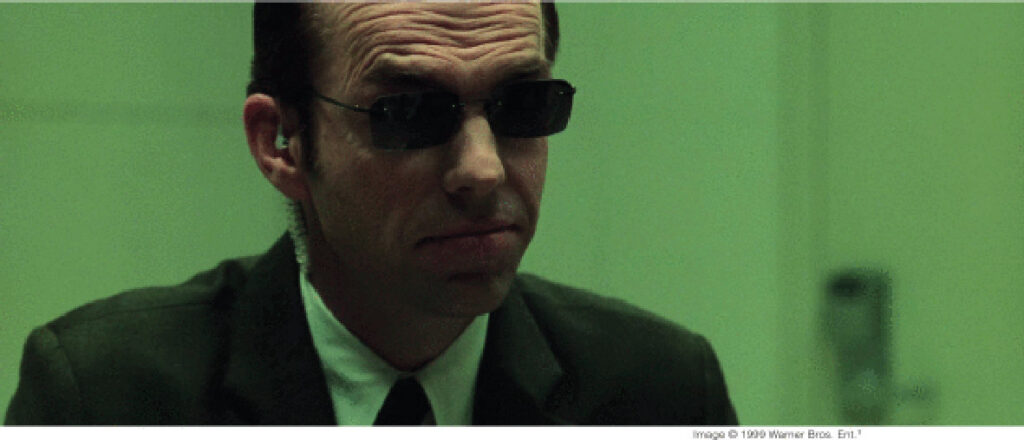
Words matter. As do the images, they evoke. And in the case of AI, both have been wildly misapplied. From news reports to scholarly papers, AI has been described as “intelligent,” “autonomous,” “generative,” and even as soon-to-become “conscious” or “superhuman” [1]. Yet, much of this language is imprecise, anthropomorphic, and misleading [2], [3], [4].
AI or Artificial Nonintelligence (ANI)?
The problem probably started with the unfortunate naming of the field: “artificial intelligence.” Introduced by John McCarthy in 1955, the term promised the simulation of human thought in a machine once all its functional components were fully described [5]. Seventy years on, though we have come a long way, we are still far from this goal.
Intelligence, as a concept, continues to elude us [6]. It involves complex cognitive processes such as learning, problem-solving, memory, and consciousness [7]. While we still cannot say with any definitiveness what intelligence is, we at least have an intuitive sense of it [8].
We call Einstein and Newton intelligent, for example, but we call babies that, too. Humans can be said to possess it, even animals, but not lifeless things. You would not say that a rock is intelligent because it managed to survive millennia of wind and water erosion. But you can say early humans were intelligent for using caves as shelter from the elements, or for drawing pictures on the walls of men hunting big game. Similarly, you could say a dog is intelligent for responding to its owner’s calls.
Calling something intelligent, even artificially intelligent, ever so subtly implies that it is more than just a thing, more than a tool. And yet, that is precisely what AI is: a tool, a thing.
Indeed, you would not call a mechanical calculator intelligent because it accurately produces answers to the most complex mathematical calculations—much faster than any human could [9]. You would not even call a chess computer intelligent because it manages to beat human grandmasters.
Calling something intelligent, even artificially intelligent, ever so subtly implies that it is more than just a thing, more than a tool [10]. And yet, that is precisely what AI is: a tool, a thing [11]. And not even a tangible thing at that, but a virtual one: a software program, a set of adaptive algorithms that mimic, in a very rudimentary way, the neural workings of the brain, running on a network of computers in datacenters across the world. A sophisticated program, undoubtedly, built on decades of research across many fields—mathematics, software engineering, neuroscience, cognitive science, and linguistics—but a thing, nonetheless.
Yet, the language we use for AI is often the language reserved for humans, to describe human traits and actions [12]. When we speak of “training” the algorithm or of “self-learning,” what actually happens is that the internal components of the algorithm are configured or calibrated such that its outputs resemble the desired results as closely as possible (see [13, Ch. 5]) (when your car is serviced at the garage, something similar happens: the engine control unit is not “trained” or “self-learning”; it is just being updated and recalibrated to handle the new parts that went into it).
When we say AI “recognizes,” say, a face, it does not actually recognize anything, not in any human way—it compares detected pixels to a reference set and returns the most probable match [14], [15].
In other words, it is computing, as it was designed to do. It is calculating, performing statistical operations on massive datasets, storing data, and so on. It is, simply, “crunching numbers”—another metaphor, but one that emphasizes the purely mechanical nature of the process. That the output of this number crunching appears as text, images, or video only adds to the illusion of an autonomous artificial “being” doing human-like things [16].
However, while the computations themselves may be highly accurate, the interpretation of the results—the translation of these raw computational results to the humanlike output—is not, since this interpretation is based on a limited set (however large) of human examples: the so-called “training” data. This makes the system inherently prone to errors, distortions, and a kind of slavish mimicry [17].
Hallucinations, Confabulations, or Straight-Out Bullshitting?
By describing the technology in human terms, it is easy to mistake it for something human-like. What the technology does, however, is mimic human action through “best-guess” statistics, by processing countless examples of desired outputs to calibrate its adaptive algorithms. The more these algorithms are calibrated, the better they become at “predicting” a desired response. But they do so without understanding what this response means or implies [18]. It is like saying something in another language that sounds plausible, without having a clue what the words mean.
In a sense, it is faking. Or rather, it is bullshitting [18]—guessing through statistics rather than through human-like thought or intention. It has no way of knowing whether what it is letting you see or hear is true or moral, since it has no experience of reality or morality. It simply does not know what it is doing. After all, it is not consciously doing anything—it just solves a computational problem provided by the user, returning a result, whatever that result may be.
When we encounter errors or oddities in AI responses—nonsensical results obvious only to the human mind—some euphemistically speak of “hallucinations” or “confabulations.” But hallucinations or confabulations are symptoms of a malfunctioning human mind; when it is seeing things that are not there or recalling events that never happened.
That is not what happens when AI returns, say, a fictional paper from a nonexisting author, an image of a shark with paws, or a reenactment of the battle of Waterloo fought with machine guns. Algorithmically, the program has worked just fine, that is, exactly as designed [19]. These so-called “glitches” are not glitches at all; they are merely shortcomings inherent to the workings of the system.
Keep in mind that the current widespread roll-out of AI, the sheer scale and speed with which we have been expanding computing power, is unprecedented, making this still a giant experiment—one that ultimately may prove successful, or not.
AI Inherently Nongenerative
Another obvious limitation of this technology is that it reproduces rather than “creates,” imitates rather than “generates” [20]. It does not come up with an exact copy of the original but instead delivers something that seems like a blend of many originals.
Yet, some already call today’s conversational bots a form of “generative” AI, as they can generate pieces of text when prompted [21]. Again, what the system does is it computes correlations across massive datasets to come up with a plausible response. It does not create, any more than a brush attached to a rotating wheel creates when, dipped in paint, it flings splashes onto a canvas [22].
Mystery of AI
Sometimes it is suggested that it is not entirely clear how AI manages to produce such remarkable results; how, precisely, they arrive at their wondrous texts or images [23]. As if they had mysteriously acquired some baffling autonomy unforeseen by their makers, reminiscent of the emergence of multicellular life on Earth. Or as if the program’s output held some deeper meaning, much like the cryptic mutterings of the Oracle of Delphi.
But that is simply not the case. That the algorithm has some degrees of freedom—perhaps, a better terminology than “autonomy” in this context—to optimize its computational configuration and that the outside world may not be able to discern step by step how it reached its output—which, after all, is inherent to the programs architecture—does not mean the algorithm’s creators are in the dark as to what is going on. They know exactly what the algorithm does and how it does it. For the algorithm’s behavior is still very much determined by the rules and constraints set by its designers [24], [25]; nothing magical or inexplicable there. In that sense, AI is like any other software program.
That the results obtained so far may seem surprising has little to do with developers not understanding them but everything to do with the scale of the results we are seeing today, achieved with relatively basic algorithms, based on our rudimentary understanding of the human mind and our simplistic models of the brain’s architecture [26]. Keep in mind that the current widespread roll-out of AI, the sheer scale and speed with which we have been expanding computing power, is unprecedented, making this still a giant experiment—one that ultimately may prove successful, or not.
General, Superintelligent, Superhuman AI
Despite these systemic shortcomings, reports continue to prophesy the imminent arrival of ever more “intelligent” algorithms [27], [28], [29]. Enthusiasts speak of “general” intelligence as opposed to the “narrow intelligence” of current systems [30]; there is talk of “super” [31], “strong” [32], or “human-level” [33] intelligence. Some, among them respected thinkers and industry specialists, even issue stark warnings about human safety, imagining the birth of a new noncarbon lifeform soon to be competing with humanity [34]. These pieces often read like science fiction, building on the same imagery and anxieties, understandably drawing much media attention.
But there is confusion as to what exactly is meant by these terms [35]: do they refer to true autonomy, or “merely” to problem-solving capabilities on par with—or even exceeding—those of humans (“Ph.D.level proficiency in all academic fields” [36])?
If machines were to achieve true human-like intelligence, they would need not only syntax—the manipulation of symbols—but mastery over semantics and contextual understanding based on real-world experience as well. They would probably need consciousness and agency too—the very qualities that enable us to act, rooted in our biological life form [37].
There is broad consensus, however, even among enthusiasts and alarmists, that with the current state of the art, there is no clear pathway to such capabilities [38], [39], [40]. Predictions of a fully autonomous superintelligence are often based on little more than the rapid pace of developments so far (see [41])—a bit like people a century ago predicting the imminent arrival of flying cars running on water: wildly speculative at best.
Alternative Intelligence
The image of AI taking over the world seems to produce two opposite, yet mutually reinforcing effects that render it doubly false. On the one hand, those convinced of Al’s steep development trajectory and its big impact on society—and on potential future profits—see their beliefs (or hopes) reinforced. On the other hand, the skeptics only see hyperbole and hype, which deepens their skepticism even further.
Yet, even if the image of a supreme AI proves false and AI will never evolve into the Replicants or Terminators of the movies, that does not mean their impact will be limited. On the contrary, current AI systems excel at processing enormous datasets, detecting patterns, and predicting likely outcomes. They already vastly outperform humans in raw computing power and information exchange speed, making them exceptionally powerful tools in down-to-earth domains such as predictive maintenance [42], weather forecasting [43], medical diagnostics [44], and basic code generation [45].
The point is not that things will not move as fast as some now predict, but rather that things don’t need to move as fast for these tools to fundamentally reshape human labor, specifically office work—much as mechanical automation once did to factory and farm work [46].
Perhaps, then, “alternative intelligence” would be a better term for what is emerging on the horizon—if one insists on the acronym. Or better still, we could step away from the metaphor altogether and adopt a more neutral term [2], such as “adaptive statistical pattern engine” or something along those lines.
Indeed, what we are seeing today is less a revolution than an evolution of office automation, which, with tools such as e-mail, word processing, and online meeting and collaboration platforms, has been underway for decades [47].
AI may be seen as the next step in this long trajectory, amplified by economic drivers such as the cost of labor, an increasing shortage of workers due to aging populations, the pursuit of greater efficiency by eliminating redundant business processes (getting rid of “bullshit jobs”), and the improvement of quality [48], [49].
Eventually, fewer people will be needed to produce the same output, indeed. But has not this been the very point of industrial civilization all along?
Replacing or Enhancing Humans?
Typically, jobs are said to be “replaced” by AI [50], [51]. But, in practice, it is usually certain tasks—rather than entire jobs—that are increasingly carried out by machines, leading to reshuffling in roles, responsibilities, and business processes [52], [53].
Just as mechanical automation reshaped the factory floor, so too cognitive automation will reshape the office, with some tasks taken over by machines, others aggregating into new roles. Some jobs might indeed disappear over time, while others will be newly created.
This trend is hardly new. The introduction of software tools transformed the role of secretary to the broader one of office manager; calculators at one point gave way to computer programmers.
Eventually, fewer people will be needed to produce the same output, indeed. But has not this been the very point of industrial civilization all along? From water wheels to steam engines to computers and now sophisticated algorithms, we have always sought to augment human labor and free ourselves from heavy and repetitive toil.
What feels different today is that for the first time, not only mechanical power is being automated, but cognitive power as well [49]—the so-called “smart” work of the mind, according to many, the essence of our humanness.
What, then, will there be left for humans to do, if anything at all? What would a shortage, or perhaps even an absence, of human work mean for society? For our sense of purpose?
By using imagery that suggests all human work is on the verge of being replaced, a grim picture is painted of Al’s consequences. We are reminded of societies that once flourished with the abundance of work but were left upended as soon as the work moved else where or was taken over by machines [54].
But expecting a transformation as rigorous as that anytime soon is simply unrealistic [55]. It assumes linear extrapolation of what we can oversee today, while history shows us that systemic changes are rarely linear [54]. Imagine the sheer computing power needed to replicate all professional mental activity, the vast energy needed to power all these data centers [56], the enormous effort required to “train” all these algorithms, yet to be invented across every field of intellectual work.
And even if technically feasible, societies would likely resist such changes, as they have historically resisted disruptive innovations [54]. Remember the Luddites, who were famously not opposed to new technology per se, as they have often been misportrayed—again, this false image—but to the unequal distribution of the benefits reaped from these innovations [57].
Major changes simply take time [58]. Think of the shift to the Internet economy, once predicted to be largely completed by the early 2000s, but which is still very much unfolding today [59].
This false imagery does another thing: it diverts attention from the more pressing danger of AI: not obsolescence, but inequality—the concentration of enormous wealth into the hands of a few—and the societal and political upheaval that comes with it [60]. The real threat is not thinking machines; it is thoughtless humans using machines to acquire power and control.
Automation, economists agree, concentrates productivity gains in the hands of a few and exerts downward pressure on wages [61], [62]. Emerging tech companies typically oppose worker organization, reinforcing this dynamic even further (see [63], [64]).
In some circles, referring to those most vulnerable to losing employment, there is already talk of “eaters”—people who consume without contributing anything to society in return [65]. With the advent of AI, this category may increasingly include formerly high-paid knowledge workers, further upsetting existing social hierarchies.
Reassuringly, discussions on large-scale AI adoption often include the idea of a “universal basic income” [66]. Sadly enough, though—and perhaps ominously—there is still little talk of “universal basic capital or ownership”—for example, by compensating displaced workers with company shares—which would do far more to counter inequality than a basic income could, given current global tax codes [67].
Thus, the imagery of a “universal basic income” worryingly coincides with that of “eaters,” whom you need to provide the bare minimum to survive—but not an ounce more—so as not to be labeled inhumane.
Author Information
Colin Ashruf is an independent advisor. He has an MSc and a PhD from Delft University of Technology, Delft, The Netherlands. Email: colin@ashruf.com.
1 All Rights Reserved. Included under Fair Use (17 U.S.C. § 107) for the purposes of scholarly critique and commentary. Still (retrieved from Stillslab.com) from the movie The Matrix (1999), directed by the Wachowskis, produced by Village Roadshow Pictures and Silver Pictures, and distributed by Warner Bros. Pictures. The image shows Agent Smith, the main antagonist, a software program that has literally taken a human form within the simulated world that machines created for enslaved humans to “live” in. An illustrative example of anthropomorphizing AI in popular culture.
_________
To read the full version of this article, including references, click HERE.
______________

 JOIN SSIT