



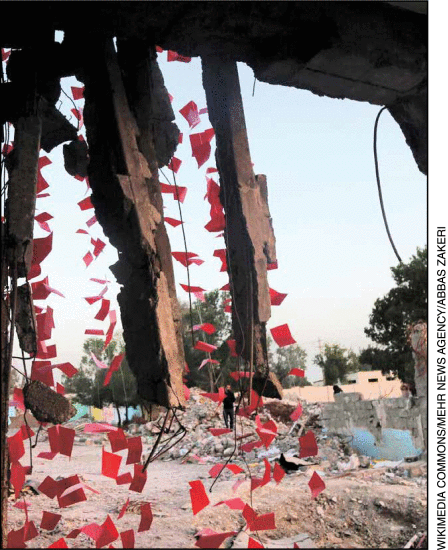
The bombing of the Shajareh Tayyebeh girls’ elementary school in Minab, a coastal city in the Hormozgan province of southern Iran, on 28 February 2026, resulted-according to most reports currently available-in the death of more than 170 people, the majority of whom were girls between seven and twelve years of age, and in more than one hundred additional injuries. [25], [26] At the moment of writing (midMarch 2026), the incident represents the deadliest single episode involving civilian casualties in the conflict between the United States, Israel, and Iran. International organizations rapidly condemned the attack: UNESCO described the strike as a “grave violation” of international law that endangers students and teachers and undermines the right to education. [27].
The episode also generated strong reactions from prominent international figures and human rights advocates. Malala Yousafzai—United Nations Messenger of Peace and Nobel Peace Prize laureate, widely recognized for her advocacy of girls’ education after surviving a Taliban assassination attempt in Pakistan in 2012—publicly condemned the attack, writing that the victims “were girls who went to school to learn, with hopes and dreams for their future. Today, their lives were brutally cut short. Justice and accountability must follow.” [28] In a similar vein, several United Nations experts expressed profound shock and grief, emphasizing that a strike against a school constitutes a direct assault not only on children and education but also on the future of the affected community. As one statement summarized the situation, “there is no excuse for killing girls in a classroom [29].”
In the immediate aftermath of the strike, political responsibility for the incident became highly contested. U.S. President Donald Trump initially suggested that the attack may have been carried out by Iranian forces themselves [30], possibly using a Soumar missile [31]. However, subsequent investigations and open-source evidence—including footage showing a Tomahawk missile striking an Islamic Revolutionary Guard Corps (IRGC) compound located next to the school [32]—have pointed to the likelihood that the strike was conducted by U.S. forces [33], [34]. A growing number of military analysts and experts have, therefore, acknowledged the plausibility of U.S. responsibility for the operation [35]. At the same time, U.S. officials have suggested that the strike may have resulted from a targeting error rather than from a deliberate attack against civilians [36], [37].
Regardless of the precise chain of operational decisions that led to the event, the Minab strike raises a number of fundamental questions about contemporary warfare. In particular, it highlights critical issues concerning the reliability of military intelligence, the integrity of targeting procedures, and the potential role that advanced technological systems—including artificial intelligence—may increasingly play—on the one hand-in the identification and prioritization of military targets, and—on the other hand—in the acceleration or automation of attacks. As modern armed forces rely more heavily on data-driven intelligence systems and algorithmically assisted analysis, the risk emerges that errors originating in outdated information, flawed databases, or automation bias may propagate rapidly through the operational decision-making chain.
As modern armed forces rely more heavily on data-driven intelligence systems and algorithmically assisted analysis, the risk emerges that errors originating in outdated information, flawed databases, or automation bias may propagate rapidly through the operational decision-making chain.
In this short opinion piece, we attempt to analyze the Minab incident from both a technical and an ethical perspective. First (in the “Technical account of what may have happened” section), we reconstruct the strike from a military-technical standpoint, discussing several operational mechanisms that may plausibly explain how the attack unfolded. While many of these aspects have received limited attention in journalistic reporting, they are important for understanding both the attribution of responsibility and the structure of modern targeting processes. Second (in the “Targeting failure or deliberate attack?” section), we examine whether the episode should be interpreted primarily as a targeting failure resulting from operational incompetence and flawed intelligence, or instead as a deliberate act of violence against civilians. Although the available evidence appears to support the former interpretation, this conclusion does not diminish the gravity of the event, which has deep legal and moral implications.
Building on this analysis, the “From targeting failure to institutional oversight” section discusses the growing integration of artificial intelligence and algorithmic tools in military intelligence gathering and strike planning. In this context, we defend the view—developed in previous works (e.g., [12], [13])—that meaningful human involvement should not be limited to the final authorization of lethal force but should instead be embedded across the entire decision-making architecture in which AI-supported technologies operate. Finally (in the “Civilian harm oversight and the institutionalization of ’war juries”’ section), we propose a set of practical institutional recommendations aimed at strengthening safeguards against civilian harm. In particular, we argue for the creation or reinforcement of specialized civilian harm mitigation mechanisms capable of reviewing targeting procedures and ensuring that operational decisions remain consistent with the legal and ethical principles governing armed conflict.
More broadly, the Minab strike illustrates a structural tension in contemporary warfare [1], [5], [20]. As targeting systems become increasingly datadriven and technologically accelerated, traditional mechanisms of legal and ethical scrutiny risk becoming insufficient. This article argues that addressing this tension requires not only technical safeguards but also new institutional forms of civilian oversight capable of re-embedding human responsibility within AI-mediated military decision-making.
Technical Account of What May Have Happened
The Tomahawk land attack missile (TLAM) is an all-weather, subsonic cruise missile in service with the surface ships (such as Arleigh Burke-class guided-missile destroyers) and submarines (such as SSNs, SSGNs, and Astute) of the U.S. and the U.K.’s Royal Navy that can strike targets—in its most recent configuration—from 1,600 km away. The Tomahawk was originally produced by General Dynamics and is currently manufactured by Raytheon [38]. Several variants of TLAMs have been deployed since it was originally produced [39].
The Block II TLAM achieved initial operating capability in 1984 and was first used—in its variants C and D—in combat during Operation Desert Storm in Iraq in 1991 to target and destroy either hardened targets (such as naval bases) or softer ones (such as air defenses). Block III upgrades include a combination of mechanical and technological improvements, most notably the addition of a GPS navigation system and loitering capabilities that reduced mission planning and increased accuracy. Block IV features further improvements, such as the capacity to be rerouted in-flight to attack new targets. Furthermore, it is endowed with cameras and a series of electrooptic sensors that allow its operators to give them back on the ship or submarine a real-time damage assessment of the battlefield. Block IV has a range of 900 nautical miles or 1,600 km and carries a 1,000lb . warhead [15]. Block IV missiles are being converted and upgraded to Block V.
This upgraded version, which is known as Block V TACTOM [40], possesses—as far as we know—enhanced navigation and communication systems that allows it to strike moving targets, modernized data-link radio, as well as the capacity to transform the remaining fuel of the missile into a fuel air explosive that causes an additional thermobaric explosion upon impact (this might be a feature that Block IV already had) [41]. All these upgrades were performed throughout the years at Raytheon’s Tucson, Arizona, facility. The U.S. Navy plans to operate Tomahawk cruise missiles beyond 2040. Since official statistics on the combat effectiveness of Tomahawk missiles are not publicly disclosed, precise failure rates remain difficult to establish. However, available operational evidence and historical data suggest that missile performance varies across missions and that failures, deviations, or incomplete effects cannot be excluded from any plausible reconstruction of the strike.
As noted above, several elements in the currently available evidence point toward the involvement of U.S. forces in the strike on the Shajareh Tayyebeh girls’ elementary school in Minab, using a salvo of Tomahawk Land Attack Cruise Missiles (TLAMs). A plausible reconstruction of the strike dynamics can be proposed based on available open-source information, the known capabilities of the weapon system, and knowledge of military doctrine.
Cruise missiles’ salvos are typically launched by different ships at different locations, but they are all supposed to arrive on target pretty much at the same time to maximize damage and surprise. This means that the ship/s (or submarine/s) located furthest from the target launch/es first, while the combatant/s located nearest delay the launch to align with others’ arrivals. In the case at stake here, the bombing of the school, it appears that a few Tomahawks were launched on different targets, which were previously selected as hosting sensitive military infrastructure of the IRGC. Some of the missiles launched appear to have struck facilities that produced no visible secondary explosions, while others hit locations where secondary explosions were reported. One of the sites affected was the area of the Shajareh Tayyebeh girls’ elementary school. The identity and function of the other impacted facilities remain uncertain; some sources have suggested that one may have been a medical clinic located within or near an IRGC compound, but this claim cannot be independently verified on the basis of the information currently available.
Given the notable shortage of Tomahawk missiles in the U.S. arsenal, which is due to a number of problems that include various production bottlenecks and high depletion rates as well as the observation that older variants of the missile (such as Block 3) will soon be decommissioned [42], one might assume that only the older variants of the missile—Block 3, for example—were used for initial targeting and that the newest variant (either Block IV or V), which is far more expensive and rarer in the arsenal, was deployed as an additional monitoring and striking means.
As noted above, at least one of the impacted locations was a civilian site: the Shajareh Tayyebeh girls’ elementary school. Civilian deaths and casualties were reported after the initial strike, and emergency assistance began to arrive on site shortly after the initial impact. After the initial impact, the arrival or gathering of survivors, school personnel, parents, and first responders near the affected site would be consistent with ordinary emergency responses to attacks on civilian infrastructure.
At the same time, the capabilities of the loitering Tomahawk allow the remaining missile to transmit real-time imagery of the battlefield to operators monitoring the mission from the launching platform. The operators receiving this information may have observed smoke, damage to the targeted infrastructure, and the arrival of civilians and emergency responders at the site. In operational contexts characterized by incomplete situational awareness and high-tempo decision-making, such activity could potentially be interpreted as evidence that the initial strike had not fully neutralized the intended target.
Under such circumstances, it is likely that operators and commanders interpreted the postimpact situation as indicating that the target had not been fully neutralized and authorized a follow-on strike (with the additional thermobaric weapon) on the same location with the aim of killing the survivors of the first strike.
This reconstruction of what might have happened is indeed consistent with first-hand witness reports coming directly from the scene [43], [44], [45] that explicitly state that the target was double-tapped, that is, it was subject to an initial attack which was followed by a second strike shortly after. This scenario is also broadly compatible with the functionality of the Tomahawk missile (Block IV) and is in line with the mission’s strategic needs1 as well as with the limited effectiveness of the missile.2
Of course, it should be emphasized that the reconstruction proposed here remains provisional. It is based on publicly available information, the known capabilities of the weapon system, and general knowledge of military doctrine and practice. The precise sequence of events that led to the Minab strike may not be fully known for years, given the opacity that typically surrounds military operations and the difficulties faced by independent investigations during ongoing conflicts. Nevertheless, the normative significance of the case does not depend on confirming every operational detail. Even if future evidence were to revise aspects of the reconstruction presented above, the broader ethical and institutional questions raised by the incident—particularly those concerning flawed intelligence, technologically accelerated targeting, AI-assisted analysis, and civilian oversight—would remain highly relevant.
Targeting Failure or Deliberate Attack?
Having outlined a plausible reconstruction of the Minab strike, we now reflect on whether this incident was truly a targeting mistake (the result of sheer incompetence and sloppiness) or instead a vicious and deliberate attack against unharmed civilians [11]. First, we need to go back to the issue of targeting. So, how do militaries typically perform targeting?
This is a very complicated issue [4]. Targeting can be performed both directly and indirectly, remotely (via satellites, for example) or on the ground (with human intelligence) [19]. What is important for the purpose of this article, however, is that militaries, in planning future wars, typically build target decks, essentially repositories of infrastructure that should be attacked in case of war to undermine the enemy’s resilience and its capacity to wage combat operations; in brief, any state keeps a list of targets that—if hit—should force its enemy into surrender. These target repositories typically include military facilities (such as naval bases, airfields, and command and control centers) as well as civilian infrastructure of various kinds (such as electric grids, bridges, thermal power plants, railroads, airports, telecommunication towers, energy nodes, etc.). If a war is in the making and the state deems that an offensive operation will be launched soon, it requires military analysts to update such target repositories, which are often old, with the newest information available to date.
Now, we do not know what sort of target repositories the United States has been using in planning such an attack, how old they were, and whether they were carefully vetted by competent military analysts. Based on the available evidence, at least two broad possibilities need to be considered. Either the targets were properly vetted, and the civilian harm was nevertheless accepted as a foreseeable consequence, or the targets were insufficiently vetted, and the strike resulted from flawed intelligence, inadequate verification, operational negligence, or, possibly, overreliance on AI mapping technologies and analysis tools.
According to the U.S. Code, Title 18, on Crimes and Criminal Procedure [46] and War Crimes [47]: “Who- ever, whether inside or outside the United States, commits a war crime, in any of the circumstances described in subsection (b), shall be fined under this title or imprisoned for life or any term of years, or both, and if death results to the victim, shall also be subject to the penalty of death.”
Similarly, Article 3 of the Geneva Convention (1949), which has been labeled as the “minimum yardstick” of humanity in armed conflicts, establishes essential, minimum humanitarian standards for noninternational armed conflicts (NIACs) and requires humane treatment for noncombatants, banning murder, torture, hostage-taking, and humiliating treatment, and mandates care for the wounded [48]. The International Court of Justice has affirmed that this article reflects “elementary considerations of humanity” and constitutes customary international law, which is binding on all parties to any armed conflict [49].
There are, therefore, strong legal deterrents in place for military planners to avoid harming civilians during military operations [14]. This suggests that the attack on the school may have resulted from a combination of flawed intelligence, inadequate verification, operational negligence, and weakened civilian harm safeguards. If AI-supported analytical systems were involved, they may have amplified these vulnerabilities; however, the available evidence does not allow us to identify AI as the direct cause of the strike. In other words, the target list may not have been adequately screened and updated by competent military analysts, or their assessment may have been overridden, compressed, or insufficiently integrated into the operational decision-making process. The targeting process may also have relied heavily on AI-assisted analytical systems.
The growing integration of private AI technologies into military planning is illustrated by the increasing collaboration between U.S. defense institutions and leading AI companies.
This possibility must be situated within a broader trend: the U.S. military’s increasing reliance on pri-vate-sector AI technologies. The U.S. Army (as of 2026) has enlisted CTOs from leading AI companies [Shyam Sankar (CTO of Palantir), Andrew Bosworth (CTO of Meta), Kevin Weil (Head of Product at OpenAI), and Bob McGrew (Advisor at Thinking Machines Laboratory, former CTO of OpenAI)] as officers in the Army Reserve’s newly established Detachment 201 with the clear mission of integrating private-sector AI solutions into military operationsfrom intelligence gathering and target designation to next-generation combat system design [50], [51].
The growing integration of private AI technologies into military planning is illustrated by the increasing collaboration between U.S. defense institutions and leading AI companies. One prominent example is Anthropic, a public benefit corporation based in San Francisco and founded in 2021 by Dario and Daniela Amodei. Anthropic has publicly presented itself as a safety-oriented AI company and is known for developing Constitutional AI, a method intended to guide model behavior through explicit principles. Although this method reflects the company’s official philosophy, which is “safety-first,” when it comes to AI, it is known that in June 2025, Anthropic unveiled Claude Gov [52], a tailored AI model for U.S. defense and intelligence agencies, featuring adaptations that some external observers have interpreted as a relaxation of the ordinary safety constraints and enhanced capabilities for analyzing classified data. The Pentagon’s AI office awarded Anthropic a two-year U.S. $ 200 million deal [53], and Anthropic expanded its defense footprint with partners like Palantir, integrating Claude into classified mission workflows.
Some reports have alleged the use of Claude AI for high-stakes, classified intelligence and operational tasks, including target identification in Iran [54] and a raid in Venezuela [55].3 In April 2026, however, Anthropic reportedly sought to preserve restrictions on certain military uses of Claude, refusing terms that would have allowed the system to be used for “all lawful purposes,” including autonomous weapons and mass surveillance. The Pentagon and the Trump administration reacted sharply to this position, and President Donald Trump subsequently announced that the government would sever ties with the company. The Department of War announced on 1 May an agreement with eight other major technology companies (including SpaceX, OpenAI, Google, Microsoft, Nvidia, Amazon Web Services, Oracle, and Reflection) to use their artificial intelligence tools in its classified operations [57], [58].
Moreover, U.S. officials [59] have explicitly stated that U.S. soldiers consistently use AI to select targets and vet them, because this speeds up the process to get approval for targets. This is also confirmed by a policy brief issued in August 2024 by The Center for Security and Emerging Technology, which is a think tank dedicated to policy analysis based at Georgetown University’s School of Foreign Service [60].
Our argument here is that AI-supported targeting systems can amplify preexisting institutional vulnerabilities: outdated target decks, insufficient verification, automation bias, pressure for speed, and indifference to civilian presence on the ground. Similar concerns have been raised in relation to the diffusion of lowcost drone warfare, where technological accessibility, operational speed, and weak accountability mechanisms increase the risk of civilian harm and violations of international humanitarian law [3], [21].
Yet, even if the strike resulted from a targeting mistake involving flawed intelligence, inadequate verification, or excessive reliance on AI-supported systems, this would not diminish the legal and moral significance of the resulting harm.
The strike exemplifies a failure of the principle of distinction, which requires parties to distinguish between combatants and civilians. The incident also reveals significant ethical erosion in U.S. military protocols, which follow, the scaled back of the Pentagon’s civilian protection office in the summer of 2025, ahead of the U.S. attack on Iran [61]. Numerous senior military lawyers were fired in the last year [62], and targeting protocols were loosened. It is reported that “civilian environment teams” and “red teams” (which review targets for civilian risk) were disbanded and excluded from the operational chain of command [63]. This is consistent with what Pete Heg-seth, United States Secretary of Defense, publicly stated about rules of engagement during a speech back in September 2025. “We unleash overwhelming and punishing violence on the enemy. We also don’t fight with stupid rules of engagement. We untie the hands of our warfighters to intimidate, demoralize, hunt, and kill the enemies of our country. No more politically correct and overbearing rules of engagement, just common sense, maximum lethality, and authority for war fighters… ” “Today, is another liberation day, the liberation of America’s warriors in name, in deed, and in authorities. You kill people and break things for a living. You are not politically correct and don’t necessarily belong always in polite societies. We are not an army of one. We are a joint force of millions selfless Americans… gathered to [cursive added]” “deliver justice on behalf of the American people in close and brutal combat if necessary.” [64] And this, ultimately, may well attest to a deliberate choice to prioritize operational speed over moral safeguards.
Our argument here is that AIsupported targeting systems can amplify preexisting institutional vulnerabilities: outdated target decks, insufficient verification, automation bias, pressure for speed, and indifference to civilian presence on the ground.
This observation brings the question of intent back into view. Even if the strike can be interpreted as the result of technical failure, inadequate oversight, or operational incompetence, the available evidence still raises broader questions of institutional and command responsibility. These questions concern not only the immediate targeting decision, but also any prior conscious (deliberate) decisions to weaken, bypass, or remove safeguards designed to prevent civilian harm. Whether such circumstances could support more serious legal allegations, including crimes against humanity, is a matter for competent, independent, and international authorities to determine.
More generally, heavy reliance on AI-supported systems for intelligence gathering and strategic planning may prove dangerous when it is not accompanied by robust verification procedures and meaningful human oversight. The heavy integration of AI into military planning risks further eroding these safeguards by framing targeting as a technical optimization problem rather than a legal–moral deliberation. Human operators relying on AI develop excessive trust in AI recommendations, suspending critical judgment. With AI, this risk magnifies, to analysts as well, who may defer to algorithmic assessments without verifying underlying source reliability. In addition, AI excels at pattern recognition but struggles with temporal context—determining whether observed patterns remain valid over time. Human military intelligence is required to understand when data was collected, not just what it shows. This important point takes us to the next section, where we reflect on the need for constant, meaningful human involvement in military operations and decision-making processes.
From Targeting Failure to Institutional Oversight
Recent scholarship on targeting and civilian harm suggests that incidents officially described as “mistakes” should not be understood only as isolated operational errors. Jones [10] has shown that how military lawyers have been progressively integrated into U.S. and Israeli targeting practices, but also how legal review may become part of the operational machinery of warfare rather than an external constraint on it. Hathaway and Khan [16] similarly argued that many civilian casualty incidents are not merely accidental failures but reflect recurrent and institutionally tolerated patterns in intelligence, target verification, and poststrike investigations. Wilke et al. [24] further described these patterns as forms of “organized ignorance,” in which military institutions produce and maintain ignorance about civilian harm by privileging internal sources, excluding local testimony, and framing civilian deaths as regrettable but nonactionable errors. These analyses are important for the present argument because they show that the problem raised by the Minab strike is not simply whether AI was involved, but whether existing targeting institutions are structurally capable of identifying and correcting the conditions that make civilian harm predictable.
In this sense, the Minab incident should not be interpreted only as a possible case of individual failure or operational negligence. Rather, it exposes a deeper institutional vulnerability: modern military organizations increasingly rely on technologically accelerated decision systems that may outpace traditional mechanisms of legal and ethical scrutiny. When operational tempo becomes the primary priority, safeguards designed to ensure compliance with the principles of distinction and proportionality risk being weakened or bypassed. The result is a decision environment in which lethal force may be authorized based on incomplete, outdated, or insufficiently scrutinized information.
Heavy reliance on AIsupported systems for intelligence gathering and strategic planning may prove dangerous when it is not accompanied by robust verification procedures and meaningful human oversight.
If this diagnosis is correct, the appropriate response cannot be limited to post hoc accountability mechanisms or internal military investigations. What is required instead is the development of new institutional forms capable of introducing additional layers of oversight within technologically mediated warfare. One possible approach, inspired by the proposal of “war juries” (see [7], [12]), consists of establishing structured civilian harm oversight mechanisms that operate alongside military command structures (see the “Civilian harm oversight and the institutionalization of ’war juries”’ section). These bodies—composed of civilian representatives, legal experts, and military advisors—could review high-risk targeting processes, monitor the use of AI-supported intelligence systems, and ensure that operational decisions involving potential civilian harm are subject to independent scrutiny.
Such mechanisms would not replace military command authority but would complement it by introducing a form of civic and ethical oversight in the use of lethal force. In an era where warfare increasingly relies on remote sensing technologies, real-time data streams, and algorithmic analysis, it becomes technically feasible to expand supervision beyond the traditional chain of command. Institutionalizing forms of civilian harm oversight could, therefore, represent a realistic way to mitigate the risks associated with technologically accelerated warfare while reinforcing compliance with international humanitarian law.
Beyond these institutional vulnerabilities, it is important to recognize that several regulatory and technical frameworks aimed at mitigating the risks associated with AI-enabled warfare already exist. At the international level, several initiatives seek to address the challenges posed by increasingly autonomous military systems. The most ambitious approach consists of the development of legally binding instruments aimed at restricting or prohibiting certain categories of lethal autonomous weapons systems (LAWS). The United Nations Secretary-General has repeatedly called for the adoption of an international, legally binding instrument by 2026 to prohibit weapon systems that operate without human control or oversight [65], [66]. More than 120 states have expressed support for negotiations toward a new international treaty regulating autonomous weapons.
At the same time, existing International Humanitarian Law already imposes important constraints on the development and use of advanced weapons systems. According to the principles of distinction, proportionality, and precaution in attack, states must ensure that new weapons—including those incorporating AI components—can be used in compliance with humanitarian norms. In this regard, the International Committee of the Red Cross has emphasized that “meaningful” or “effective” human control must remain central to the deployment of weapon systems to preserve accountability and legal responsibility [67].
In parallel with legal initiatives, a variety of technical and operational measures have been proposed to mitigate risks associated with AI-enabled warfare. Military doctrines increasingly emphasize so-called “left-of-launch” strategies, which aim to neutralize adversary weapons systems before they can be deployed by targeting command-and-control networks, launch infrastructure, and operational chains [68]. Artificial intelligence may play a role in these defensive strategies by enhancing real-time surveillance, enabling predictive threat assessment and supporting cyber operations aimed at disrupting missile guidance systems.
In addition, several confidence-building measures have been proposed to reduce the risks of miscalculation, escalation, and uncontrolled proliferation of AI-enabled military technologies [17]. These include information-sharing mechanisms regarding the use of AI in military intelligence systems, prenotification protocols for the deployment of AI-enabled platforms, crisis communication channels for AI-related incidents, and export controls on sensitive technological components.
It is important to recognize that several regulatory and technical frameworks aimed at mitigating the risks associated with AI-enabled warfare already exist.
Another important dimension concerns the operationalization of human control over advanced weapon systems [22]. The framework proposed by the International Committee of the Red Cross identifies three critical stages at which meaningful human control should be ensured: the development stage, through rigorous testing and the definition of operational constraints; the activation stage, in which human operators decide whether and how to deploy a system; and the operational stage, where human supervision must remain possible and effective, including the capacity to intervene or deactivate the system if necessary [69]. Complementary proposals have also been advanced to address the so-called “accountability gap” associated with AI-mediated decision-making. These include technical traceability mechanisms such as “black-box” logging systems, clearer attribution of responsibility across the chain of command—from developers to operators—and the potential creation of international bodies tasked with monitoring compliance with emerging norms governing autonomous weapons.
Despite these efforts, progress in regulating AI-enabled warfare remains slow and fragmented. Major military powers—including the United States, China, and Russia—have expressed reservations toward binding international restrictions that could limit their technological advantages. Negotiations within the framework of the Convention on Certain Conventional Weapons (CCW) have so far struggled to reach consensus, and the Group of Governmental Experts [70] continues to debate possible regulatory elements without a clear agreement on binding commitments [18]. This persistent regulatory gap reinforces the need for complementary governance mechanisms capable of operating within existing military institutions. In this context, the introduction of structured forms of civilian harm oversight—such as the “war jury” model discussed in the following section—may represent an additional layer of accountability capable of mitigating the risks associated with increasingly automated targeting systems.
Civilian Harm Oversight and the Institutionalization of “War Juries”
A promising institutional mechanism for strengthening civilian protection in technologically mediated warfare is the introduction of structured systems of civilian harm oversight inspired by the concept of “war juries” [12]. The idea, originally developed in the context of debates on autonomous weapon systems, rests on the observation that modern military technologies increasingly allow remote observation, documentation, and partial control of battlefield operations in real time. These technological capabilities create the possibility of expanding oversight beyond the traditional military chain of command and introducing forms of civic supervision over lethal decision-making.
Compared with our previous formulation, the present version emphasizes three institutional design features: security-cleared rotating panels, a limited mandate focused on high-risk targeting decisions, and a tripartite role across ex ante review, operational oversight where feasible, and ex post accountability.
The idea of introducing civilian oversight mechanisms in the conduct of warfare is not entirely new. Theories of civil-military relations have long emphasized the importance of democratic control over the use of military force [2], [6], [8], [9], [23]. However, the emergence of AI-mediated targeting processes may require new institutional forms capable of extending such oversight into technologically accelerated decision environments.
In contemporary network-centric warfare environments—characterized by extensive surveillance infrastructures, drone feeds, and integrated C4ISR systems—it is technically feasible for operations to be monitored by actors who are not directly involved in combat, but who can nevertheless access the information necessary to assess the legality and proportionality of attacks. Building on this technological possibility, the proposal of “war juries” suggests the creation of temporary decision-making or oversight bodies composed of randomly selected citizens meeting specific competence requirements and operating alongside military and intelligence experts. These bodies would function analogously to jury systems in criminal law: representative of the broader society yet assisted by professionals capable of clarifying operational constraints and legal frameworks.
The normative rationale behind this proposal is twofold. First, war juries would introduce an additional layer of accountability in the use of lethal force, especially in contexts where increasingly automated targeting processes risk transforming military violence into a purely technical optimization problem. Second, they could serve as a safeguard against violations of international humanitarian law by ensuring that decisions involving potentially high civilian harm are subject to independent scrutiny. Even when real-time authorization is not feasible—given the speed of certain military operations—such bodies could still exercise important ex ante and ex post functions, for example, by evaluating targeting doctrines, reviewing strike lists, or assessing the legality of planned operations involving high-risk environments.
What makes the introduction of war juries both necessary and potentially effective is the transformation of contemporary warfare into a largely “remote” form of conflict.
Importantly, the purpose of these oversight mechanisms is not to replace military expertise but to complement it. War juries would operate in coordination with military planners and legal advisors, much like civilian review boards in policing systems. Their role would be to introduce a form of collective ethical scrutiny that reflects the moral commitments of the society in whose name military force is employed. By making the decision-making process more transparent and pluralistic, such institutions could reduce the likelihood of abuses, reinforce compliance with the principles of distinction and proportionality, and mitigate the risk that technological acceleration in warfare erodes existing humanitarian safeguards.
In particular, what makes the introduction of war juries both necessary and potentially effective is the transformation of contemporary warfare into a largely “remote” form of conflict. Increasingly, military operations rely on long-range missile strikes, high-altitude bombardment, and unmanned aerial systems aimed at neutralizing strategically significant targets. The primary objective of such operations is to inflict substantial damage on the adversary’s military capabilities or to weaken its capacity to sustain combat operations. Target selection in this context is, therefore, highly specific and typically involves structured targeting processes that may include automated or semiautomated analytical systems, including those powered by artificial intelligence.
Within this operational environment, war juries could play a role in monitoring—and, ideally, rapidly authorizing—the targets selected during the planning phase. Such a mechanism would not entail depriving military leadership of its authority over the conduct of warfare. Rather, its purpose would be to ensure that the evolving modalities of technologically mediated warfare—characterized by powerful long-range weapons and partially automated targeting processes—do not increase the risk of unintended civilian harm or lead to violations of international humanitarian law and the legal conventions governing armed conflict.
More concretely, war juries could be composed of a small panel of citizens selected through procedures similar to those used in jury systems, combined with experts in international humanitarian law and military operations who would provide the necessary technical guidance. Their role would not be to conduct military operations or replace command authority, but rather to introduce an additional layer of ethical and legal scrutiny over targeting decisions that involve a significant risk of civilian harm.
In practice, such bodies could perform several functions. These functions can be broadly organized into three stages of oversight: ex ante review, operational oversight, and ex post accountability. Ex ante, they might review categories of targets or operational doctrines in high-risk environments. During operations—where feasible—they could participate in rapid oversight procedures for selected strikes involving densely populated areas or uncertain intelligence. Ex post, they could contribute to independent reviews of controversial attacks, helping to clarify responsibility and evaluate whether the principles of distinction and proportionality were adequately respected. Importantly, the aim of this mechanism would not be to slow down military decision-making indiscriminately, but to ensure that technologically accelerated targeting processes remain subject to meaningful forms of human judgment and public accountability.
Given the speed at which many contemporary military operations unfold, war juries could not realistically be convened on an ad hoc basis every time a high-risk strike is contemplated. Instead, they would need to operate through a system of rotating panels that remain continuously available during defined periods of service. Similar to jury duty in civilian courts—though organized in a more specialized format—selected members would serve for limited terms, ensuring that an oversight body is always available when rapid review is required.
Participation in such bodies would also require specific preparation. Individuals selected to serve on war juries should undergo structured training covering the basic principles of international humanitarian law, the operational logic of contemporary targeting processes, and the ethical challenges associated with AI-supported military systems. The aim of this preparation would not be to transform citizens into military experts, but to ensure that they possess the minimal competence necessary to engage meaningfully with the technical and legal dimensions of the decisions under review.
Individuals selected to serve on war juries should undergo structured training covering the basic principles of international humanitarian law, the operational logic of contemporary targeting processes, and the ethical challenges associated with AI-supported military systems.
A potential objection to this proposal is that the involvement of civilian oversight bodies might slow down military decision-making in time-sensitive operational environments. However, the institutional design outlined here aims precisely to minimize this risk. By relying on rotating panels that remain continuously available during defined periods of service, war juries could provide rapid review mechanisms without requiring ad hoc convocations during active operations. Moreover, their role would focus primarily on categories of high-risk targets or operational contexts where the probability of civilian harm is particularly significant. In this sense, the objective of war juries would not be to impede military effectiveness but to ensure that technologically accelerated targeting processes remain consistent with the fundamental principles of international humanitarian law.
Another potential concern relates to the feasibility of implementing such oversight mechanisms within the highly confidential environment of military operations. The model proposed here would realistically be applicable primarily within those political systems where civilian oversight of the armed forces is already an established constitutional principle. Even in such contexts, however, war juries would necessarily operate under strict confidentiality requirements comparable to those imposed on members of parliamentary intelligence committees or special courts dealing with classified material.
Participants would, therefore, be required to comply with binding secrecy obligations and security clearances designed to prevent the disclosure of operationally sensitive information. Public transparency would not concern the details of specific military operations but rather the institutional functioning of the oversight mechanism itself. Disclosure would occur only under clearly defined circumstances—for instance, in the event of serious violations of international humanitarian law, significant disagreements between the war jury and military command authorities, or major controversies involving political leadership.
A further theoretical and institutional challenge concerns the potential divergence of perspectives between the actors involved in the proposed oversight structure. Civilian juries may, on average, adopt more precautionary or humanitarian interpretations of the principles governing the use of force, while military commanders are naturally oriented toward operational effectiveness and mission success. In addition, political authorities—such as presidents or prime ministers—may legitimately decide to pursue more risk-tolerant strategies in situations they consider strategically critical.
For this reason, the institutional role of war juries should not be conceived as granting them absolute veto power over military operations. Rather, their decisions could function as a form of qualified oversight capable of suspending or formally challenging high-risk targeting decisions. In such circumstances, political authorities would retain the possibility of overriding the jury’s objection, but only through an explicit and documented decision. This mechanism would ensure that ultimate responsibility remains with accountable institutions while at the same time introducing a structured moment of ethical and legal scrutiny within accelerated targeting processes.
War juries would not replace the political and military chain of command but would serve as a procedural safeguard designed to ensure that decisions involving a high probability of civilian harm are subjected to meaningful deliberation before the use of force.
Finally, the analogy with civilian police oversight bodies also reveals a further risk: oversight institutions can be coopted, professionalized, or reduced to symbolic legitimation. War juries would, therefore, need safeguards against institutional capture. These may include random selection from a qualified pool, limited terms of service, independent appointment procedures, mandatory disclosure of dissenting opinions to designated parliamentary or judicial bodies, and periodic external audits of the oversight mechanism itself. Moreover, the participation of legal experts should not reproduce the problem identified by Jones [10], namely, the transformation of legal review into a tool that streamlines targeting. For this reason, legal advisors should assist war juries without replacing civilian judgment, and the jury’s function could be framed as an independent civilian harm review and not an operational legal clearance.
Civilian harm oversight inspired by the war jury model might represent a realistic institutional response to the challenges posed by AI-enabled warfare.
In this sense, civilian harm oversight inspired by the war jury model might represent a realistic institutional response to the challenges posed by AI-enabled warfare. Rather than attempting to halt technological developments that are unlikely to be reversed, it seeks to embed new forms of accountability within the operational architecture of modern military systems. If properly designed, and if the objections reviewed above are taken seriously, such mechanisms could help reconcile two competing imperatives: the strategic demand for technological innovation in warfare and the enduring normative requirement to protect civilian life and uphold international humanitarian law.
The Minab school strike represents a tragic episode and one of the deadliest civilian casualty incidents involving U.S. forces in recent decades. Beyond the specific circumstances of the event, however, it highlights a broader challenge facing contemporary warfare. As military operations increasingly rely on AI-supported intelligence systems, automated data analysis, and high-speed targeting processes, the traditional safeguards designed to ensure compliance with international humanitarian law risk becoming progressively weaker.
The Minab incident, therefore, illustrates not only the dangers of flawed intelligence and operational error, or the risks involved in bypassing established rules of engagement in combat operations, but also the structural vulnerabilities of technologically mediated warfare. When targeting decisions are embedded within complex sociotechnical systems involving algorithms, distributed data infrastructures, and accelerated decision cycles, the risk emerges that lethal force may be authorized without sufficiently robust mechanisms of human scrutiny and accountability.
For this reason, addressing the ethical challenges raised by AI-enabled warfare requires more than technical improvements or internal military reforms. It also calls for new institutional mechanisms capable of reinforcing civilian protection and accountability. The proposal of “war juries” discussed in this article represents one possible step in this direction. By introducing structured forms of civilian harm oversight into the targeting process, such bodies could provide an additional layer of ethical and legal scrutiny over high-risk military operations.
Institutional innovations of this kind would not deprive military authorities of their operational responsibilities. Rather, they would seek to ensure that the increasing technological sophistication of modern warfare does not erode the fundamental humanitarian principles that govern the use of force. In an era of AI-mediated warfare, embedding stronger forms of oversight and collective responsibility may prove essential to preserving meaningful constraints on violence against civilians.
Author Information
Mirko Farina is a full professor of philosophy of technology and AI in the School of Philosophy and Social Development at Huaqiao University, Xiamen, Fujian 361021, China. He is recognized as a Talent C of Fujian Province and the Director of the Laboratory for Embodied AI and Human–Machine Interaction at the Institute for Digital Economy and Artificial Systems, a joint initiative of Xiamen University (XMU), Xiamen, China, Lomonosov Moscow State University (MSU), and Xiamen Municipal People’s Government. Email: m.farina@hqu.edu.cn.
Andrea Lavazza is a moral philosopher with an international profile in neuroethics and AI ethics. He is an associate professor at Pegaso University, 80143 Naples, Italy, and an adjunct professor of neuroethics at the Universities of Milan, Milan, Italy, and University of Pavia, Pavia, Italy, he has developed a distinctive research agenda on the ethical challenges posed by neurotechnologies, combining philosophical analysis with empirical and policy-oriented perspectives.
_____
To read the full version of this article, including references, click HERE.
______

 JOIN SSIT