By W. Bernard Carlson, Princeton University Press, 2013, 520 pages. Reviewed by Eric P. Wenaas. W. Bernard Carlson points… Read More





By W. Bernard Carlson, Princeton University Press, 2013, 520 pages. Reviewed by Eric P. Wenaas. W. Bernard Carlson points… Read More

Technological innovation over the past century has revolutionized our society’s ability to solve problems. A byproduct of this movement is… Read More

In many respects, information and communication technologies (ICTs) pose new challenges to society. It is worth recognizing what ICTs represent… Read More

This article is a summary report on the Eighth Workshop on the Social Implications of National Security Series. This year’s… Read More

A set of technologies, loosely referred to as “artificial agents,” is becoming more pervasive and more powerful in the current… Read More

The advent of the information revolution has led to the digitalization of society, affecting virtually all of its concerns. The… Read More
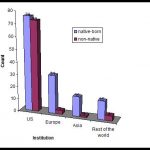
The objective of this study is to examine the intercontinental movement of highly cited researchers (HCRs) in the field of… Read More

In June 2013, Edward Snowden burst onto the world media scene. He had worked as a contractor for the U.S…. Read More

Perfecting Sound Forever-An Aural History of Recorded Music. By Greg Milner. New York, NY: Faber and Faber, Inc., 2009, 416… Read More

By David E. Nye. Cambridge, MA: M.I.T. Press, 2013, 338 pages Reviewed by David Wunsch If I asked you to… Read More
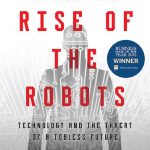
Rise of the Robots: Technology and the Threat of a Jobless Future. By Martin Ford. Basic Books, 2015, 224 pp…. Read More
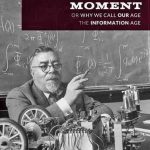
The Cybernetics Moment, Or Why We Call Our Age the Information Age. By Ronald R. Kline. Johns Hopkins University Press,… Read More

By Jai Galliott. Surrey, U.K.: Ashgate, 2015, 266 pp. Reviewed by Tim McFarland Perhaps the most well-known, and controversial, development… Read More

Digital Militarism: Israel’s Occupation in the Social Media Age. By Adi Kuntsman and Rebecca L. Stein. Stanford University Press, 2015,$21.95… Read More

Low Power to the People: Pirates, Protest, and Politics in FM Radio Activism. By Christina Dunbar-Hester. Cambridge, MA: M.I.T., Nov…. Read More
Probing the Sky with Radio Waves: From Wireless Technology to the Development of Atmospheric Science. By Chen-Pang Yeang. Chicago, IL:… Read More
The Innovators: How a Group of Hackers, Geniuses, and Geeks Created the Digital Revolution. By Walter Isaacson. Simon and Schuster,… Read More
By Jonathan Coopersmith, Johns Hopkins University Press. 320 pages, 2015 Reviewed by Erik L. Stayton I have never had… Read More

The Book That Inspired the Film The Imitation Game. By Andrew Hodges. Updated Edition. Princeton Univ. Press, 2014. Reviewed by… Read More
I’m preparing a course for this Fall on the future, and pursuing a number of related books that will no… Read More
 JOIN SSIT