
Regenerative agriculture involves improving, not depleting, the resources used. Cora and Mike’s methods emphasize the symbiotic relationship between the animals and the land, ensuring that both thrive in a balanced and healthy environment.


Regenerative agriculture involves improving, not depleting, the resources used. Cora and Mike’s methods emphasize the symbiotic relationship between the animals and the land, ensuring that both thrive in a balanced and healthy environment.

Modem Futura is your guide to the bold frontiers of tomorrow.

Food security and agriculture are complex systems that interconnect with many other issues, including poverty and environmental sustainability. These urgent issues inspire proposals for technological solutions. Emerging technologies are often proposed as ways to increase food supply to end hunger. Other proposals target agricultural practice, grounded in the knowledge that agriculture has a large carbon footprint, and the fear that the negative climate impacts of agriculture would worsen as the population increases.

Text Neck is a classic ergonomic issue that has come about as a direct result of technological innovation, as people have begun to increasingly use digital media of all types to text, talk, browse the internet, listen to music, watch videos, or play online games.

Spain’s Comunitat Valenciana (Valencian Community) (Figure 1) has a rich agricultural history, with long traditions of resilience and innovation. This tradition,… Read More

The articles in this special issue focus on the connected nature of the SDGs and the need to address them using community-based approaches and span essential steps for widespread SDG attainment, including planning, implementation, and monitoring.

Dr. Monica Huerta (Ecuador Section) was awarded the IEEE Region 9 Eminent Engineer Award for 2024 for R9.

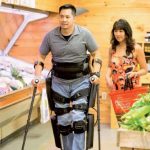
We urge that there be a federal mandate to include bionics in federal insurance programs and insurance companies regulated by Obamacare. As prostheses advance in sensory capabilities, insurance companies need to recognize prosthetic limbs as a part of the body susceptible to personal injury, not just as equipment, since they have haptic capabilities (i.e., the sense of touch) and can feel distress.

If we had a system in the United States where 50% of the time was dedicated to a single academic program for everyone, and the other 50% to social development, society would reap the benefits.

Some topics addressed on the September 13 panel included climate change challenges related to health and healthcare, contributions of computing to the climate change problem in terms of energy use, along with the potential of computing to contribute to solutions to the crisis, agriculture and food security issues related to climate change, systems design, finding solutions and improving communication across IEEE societies, carbon removal, and economic and social aspects of the crisis including forced migration, water supplies, and the responsibilities of developed nations to developing nations in climate change mitigation.

The IEEE International Symposium on Technology and Society (ISTAS 23) continued into its second day of regular programming on Thursday September 14, and included the presentation of a second panel related to climate change, this one focused on “Public Safety Technologies and Climate Change.”

It is fully possible to design diets that are nutritionally adequate, with 65% lower greenhouse gas emissions, and which do not cost more than the baseline diet.

It was a wonderful experience for me to live all of these events and realize later how everything is really connected. Where will new generations of kids get their “social skills” developed, considering that most of their social relations and interactions happen virtually through their phones or computers while avoiding in-person interactions?

Dr. Nolan and his colleagues were responsible for developing standards to protect against radiation exposure in the laboratory and during the Trinity Test in July 1945. The physicians were continually frustrated by their inability to convince the military about the dangers of radiation but “there is considerable evidence to suggest that the doctors were ever mindful of potential legal consequences and careful to take precautions to protect themselves and the military from future litigation.”

Technology has always been about more than simply a route to increased productivity and economic growth; technology also provides the opportunity to enhance, enrich, and empower—basically, to improve shared qualitative values or people’s quality of life (however that is measured). On the flip side, technology also provides the opportunity to develop and project organizational control, which itself can be weaponized to quantitatively determine human value as an asset to that organization, or to reinforce asymmetric power relationships.

“Digital and Societal Transformations” – Conference website here: https://www.istas22.org/

If caregiving is the very essence of being human, why would we consider turning it over to robots? Technology—and artificial intelligence (AI, in particular—have created a world in which automation is prioritized and digital is seen as an improvement on analog—more accurate, more portable, and more controllable. Caregiving is as analog as it gets and it is a field with a serious labor shortage. That makes it ripe for automation—and in fact, the robot caregivers are already here.

Social robotics is poised to impact society by addressing isolation and providing companionship by augmenting human interaction when none is available.

Worldwide, there are 55 million individuals living with dementia and it is projected that by 2050, this number will increase to 139 million. Technological devices and solutions that can benefit the dementia community also carry ethical implications such as privacy and issues of consent. AI-driven LBS solutions may exacerbate the marginalization of individuals living with dementia.

Governmental Affairs: Article by Luis Kun in May-June 2008 issue of EMB Magazine on Science, Technology, and Censorship.