The 2024 IEEE International Symposium on Technology and Society will be held in Puebla, Mexico, from September 18-20, 2024, at the Universidad de Las Americas, Puebla (UDLAP). ISTAS24 will be the first ISTAS conference to be held in Latin America.





The 2024 IEEE International Symposium on Technology and Society will be held in Puebla, Mexico, from September 18-20, 2024, at the Universidad de Las Americas, Puebla (UDLAP). ISTAS24 will be the first ISTAS conference to be held in Latin America.
The 13th IEEE Global Humanitarian Technology Conference (IEEE GHTC 2023) will take place in person at Villanova University (Pennsylvania) from October 12 to 14, 2023.

Some topics addressed on the September 13 panel included climate change challenges related to health and healthcare, contributions of computing to the climate change problem in terms of energy use, along with the potential of computing to contribute to solutions to the crisis, agriculture and food security issues related to climate change, systems design, finding solutions and improving communication across IEEE societies, carbon removal, and economic and social aspects of the crisis including forced migration, water supplies, and the responsibilities of developed nations to developing nations in climate change mitigation.

Please join our new IEEE Collabratec Technology and Society Community!

The IEEE International Symposium on Technology and Society (ISTAS 23) continued into its second day of regular programming on Thursday September 14, and included the presentation of a second panel related to climate change, this one focused on “Public Safety Technologies and Climate Change.”

It is fully possible to design diets that are nutritionally adequate, with 65% lower greenhouse gas emissions, and which do not cost more than the baseline diet.

What role does and can AI play in us being able to enjoy security in our places and spaces? Perhaps we could design technology-enabled spaces for the purpose of strengthening the community and empowering community action.

The purpose of this special issue is to explore and address complex securitization-related challenges, from a broader perspective and across various dimensions and sectors, that transcend disciplinary boundaries, focusing on the role of technology relevant to the securitization of people and place, while also considering the transdisciplinarity and the socio-historical originals of securitization.

Generation Z and Millennials face different types of insider threat, in three different dimensions of space: to resources, to citizenship, and to boundaries.
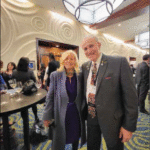
It was a wonderful experience for me to live all of these events and realize later how everything is really connected. Where will new generations of kids get their “social skills” developed, considering that most of their social relations and interactions happen virtually through their phones or computers while avoiding in-person interactions?

Stephen H. Unger, one of the founders of the IEEE Society on Social Implications of Technology, Life Fellow of the IEEE, Professor Emeritus of Computer Science and Electrical Engineering at Columbia University, champion of engineering ethics, and a prominent figure within SSIT, has died at the age of 92.

Ketra A. Schmitt, Associate Professor in the Centre for Engineering in Society at Concordia University, Montreal, Quebec, Canada, will become Editor-in-Chief (EIC) of IEEE Technology and Society Magazine (TSM) starting January 1, 2024.

The fact that science denial is deeply implicated in identity helps explain why science deniers are usually unmoved by contrary evidence that on a purely rational level should be extremely convincing.
Listen in on this Economist podcast… featuring IEEE Transactions on Technology and Society EIC Katina Michael.
Registration Now Open! IEEE International Symposium on Technology and Society (ISTAS 2023)

Strengers, an Associate Professor of Digital Technology at Monash University, and Kennedy, a postdoc at RMIT University, Melbourne, VIC, Australia, argue that if we proceed down the current path of making our digital assistants, fembots, gynoids, and voice-activated devices look, sound, and/or behave like simulacra of women, we risk reinforcing traditional gender stereotypes in ways that could rebound on real women.

The IEEE Society on Social Implications of Technology (SSIT) announces the selection of Roba Abbas of the University of Wollongong, Australia, as Co-Editor-in-Chief of the IEEE Transactions on Technology and Society (TTS), beginning May 9, 2023.

Dr. Nolan and his colleagues were responsible for developing standards to protect against radiation exposure in the laboratory and during the Trinity Test in July 1945. The physicians were continually frustrated by their inability to convince the military about the dangers of radiation but “there is considerable evidence to suggest that the doctors were ever mindful of potential legal consequences and careful to take precautions to protect themselves and the military from future litigation.”
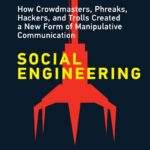
Social media companies have intentionally created platforms that actively spread disinformation. What can we do to protect our society against disinformation? A good place to start would be limiting how large and powerful these social media platforms can get.

When you actively participate in an area in which you are “passion-driven,” others notice, and opportunities will open for you. For young people, I suggest
find your passion, volunteer, and get involved.
 JOIN SSIT